Skip to content
CobourgLock & Key Co.Open 24/7 (289) 677-1674
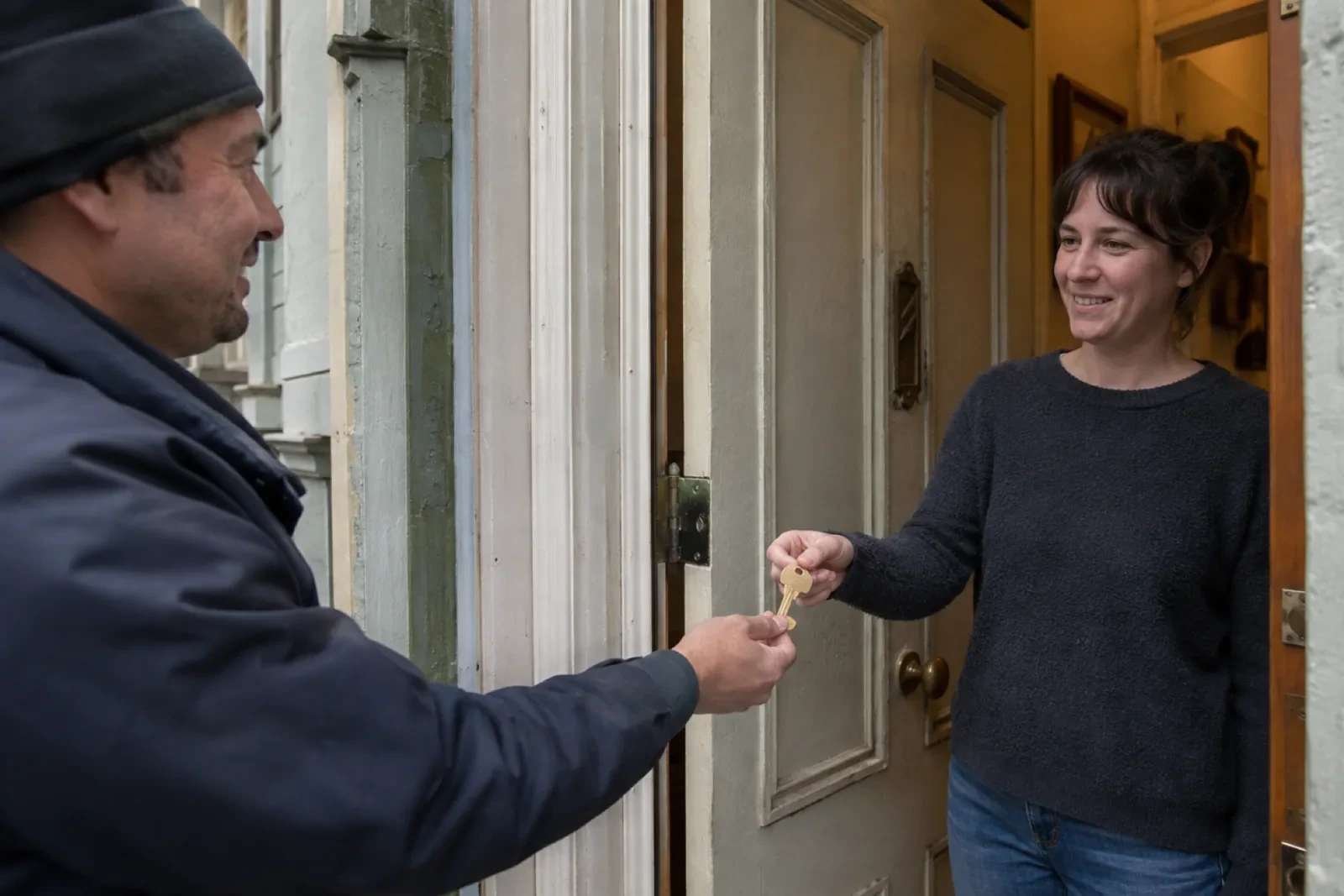
Illustrative locksmith scene — Home Lockout Service, Hamilton

Lockouts · Hamilton

Home Lockout Service

After a week of humid weather the back door has swollen in its frame. The key turns, you can feel the bolt trying to move, but it is jammed hard against the strike plate and the door refuses to open.

In plain words

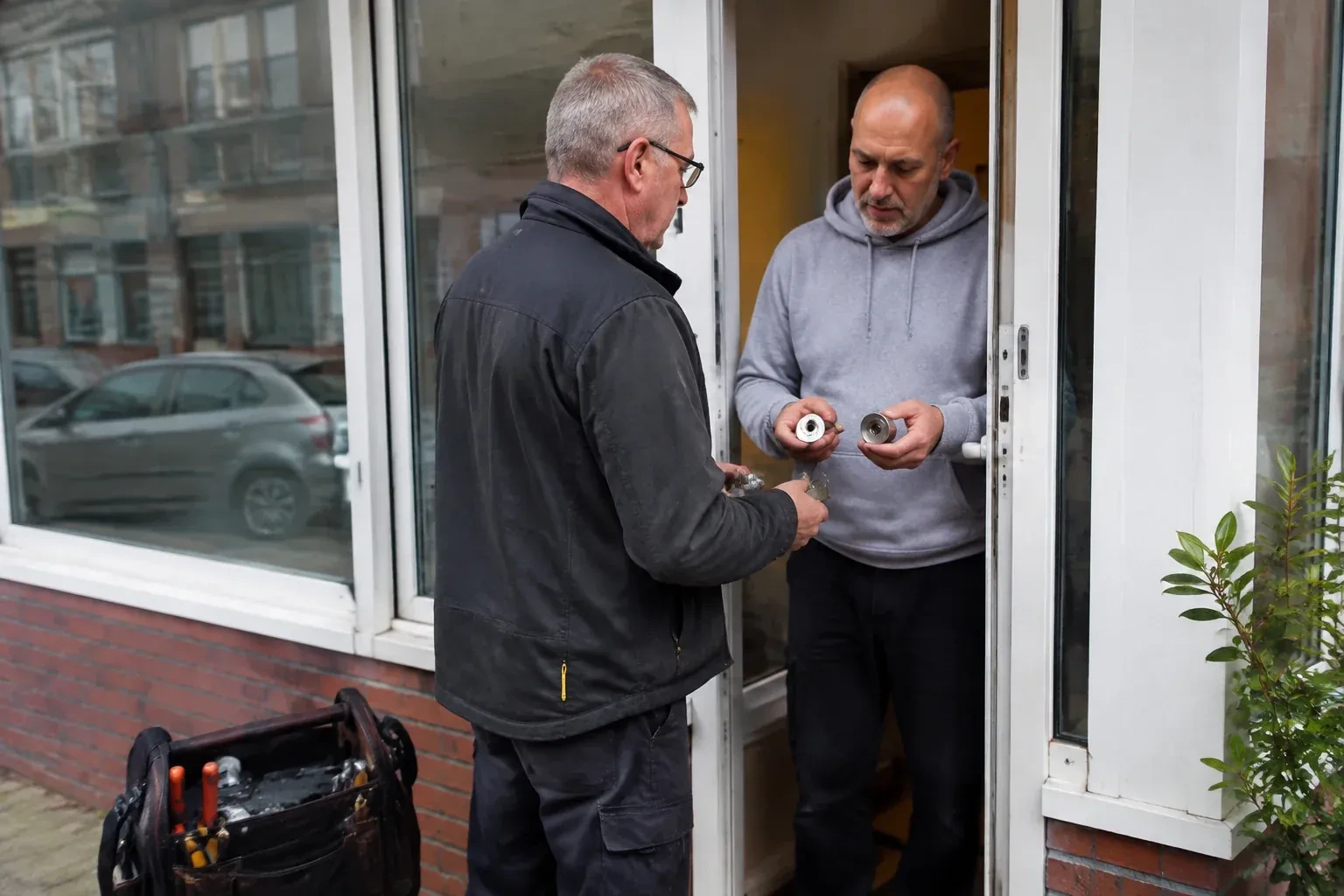
The visit follows a steady order. On the phone you describe the door, the lock and where the key went, which tells the locksmith what to bring. At the house, identification and address are checked and the lock is examined, including the door's fit in its frame. The opening itself comes next, using the least invasive technique that suits the hardware. Once inside, the lock is cycled several times to confirm it works, and you are told what was done. Any recommendation, such as rekeying because a key is missing, is explained then and carried out only if you want it.

Sound familiar?Hamilton

The call
It is minus fifteen, the wind is coming across the driveway, and the key will only go halfway into the deadbolt. Yesterday's thaw left water in the keyway and overnight it froze solid. Forcing it only makes the metal flex.
NextHow the visit goes

Home Lockout Service · Hamilton

How the visit goes

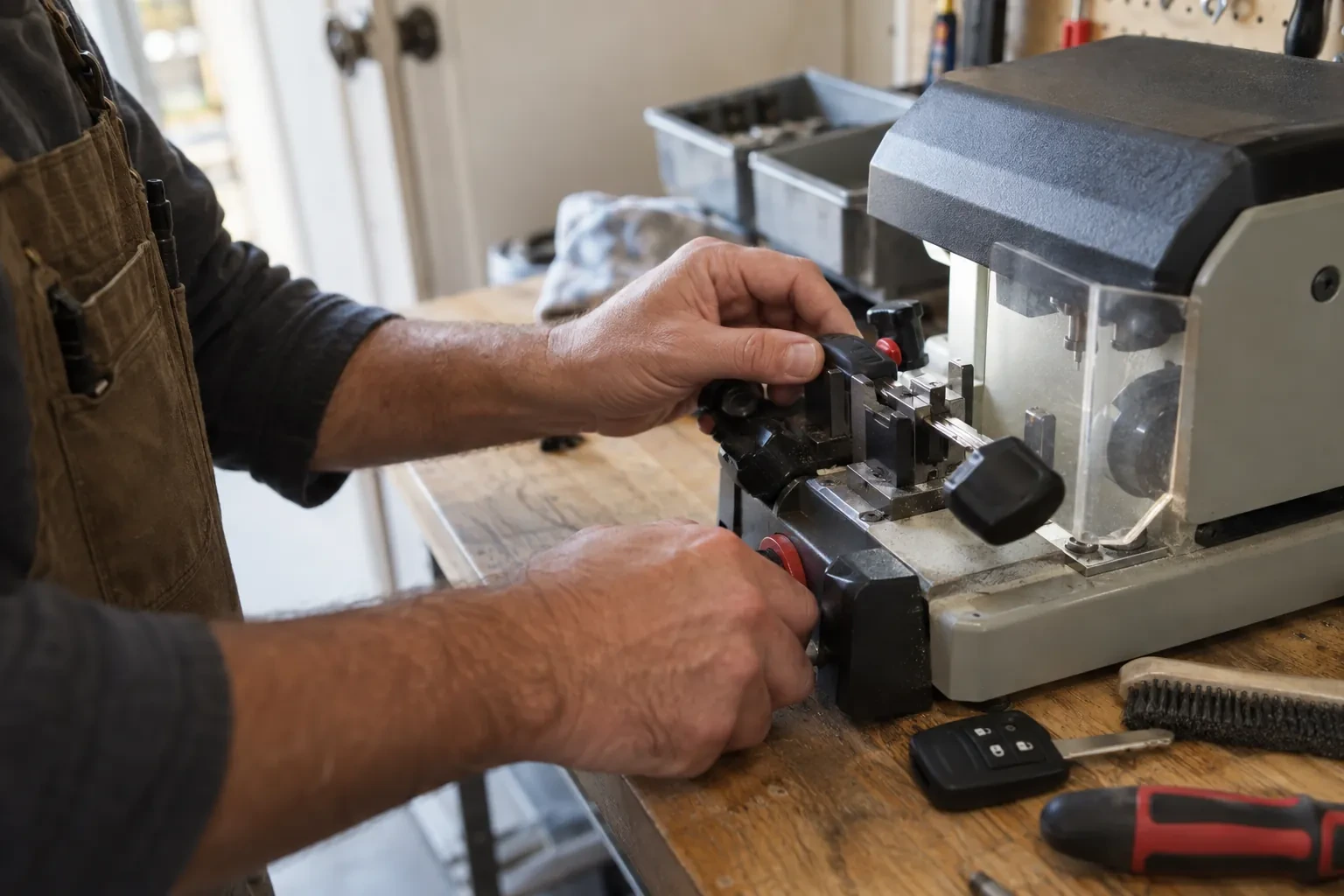
Illustrative locksmith scene — Hamilton
  1. Scene 1

    Cold, ice and salt on the hardware

    In winter the assessment starts with the weather. A keyway that took on meltwater during a thaw can be frozen solid by morning, and salt spray from a nearby driveway leaves a crust that gums up the pins. The locksmith looks for frost around the cylinder face, tests how far the key seats, and feels whether the plug is stiff from cold grease or genuinely iced. This decides between a gentle thaw with lock de-icer, warming the cylinder, or picking once the ice releases. It also flags hardware that should get a dry lubricant and a weather cover afterwards so the same morning does not repeat next week.

  2. Scene 2

    Opening a latched knob or lever

    When the door has simply latched behind you and the deadbolt was never thrown, the job is often the gentlest one a locksmith does. A spring latch is bevelled so the door can close on it, and without an engaged auxiliary deadlatch that bevel lets a latch tool ease it back without touching the keyed cylinder; a properly engaged deadlatch resists that and needs a different approach. Where the door-frame gap is tight, or a guard plate covers the latch, the locksmith picks the knob cylinder instead, routine work on standard residential hardware. The knob is then checked for a loose spindle or sagging latch, since a door that catches unexpectedly is often telling you the latch is worn.

  3. Scene 3

    Ready for the next cold snap

    After a winter lockout you leave with a cylinder that has been dried and dressed with a moisture-shedding lubricant, and usually a small tube of lock de-icer for the glove box or coat pocket. Keeping the storm door closed shields the main lock from freezing rain, and a simple keyhole cover on an exposed side door stops meltwater getting in during a thaw. If the door itself was frozen to its seal, the weatherstripping has been cleared and a light silicone wipe on it stops it bonding to the door again. These small habits carry most households through a whole season of freeze and thaw without another stuck morning.

In the van

  • Dry graphite or PTFE lubricant
  • Broken key extractors
  • Lock de-icer
  • Plug follower and repinning kit
  • Strike plate and long hinge screws

What shapes the quoteCobourg Lock & Key Co.

Keying other doors to match
Bringing the back door, side door and garage onto the new key after a rekey is extra work per cylinder, and simplest to arrange during the same call-out.
Door and frame adjustment
When the lockout was really a swollen or sagging door, fixing the cause means work on hinges, strike plate or weatherstrip. That adjustment is quoted as its own item alongside the opening.
Whether the key is inside or lost
If the key is inside, the visit ends when the door opens. If it was lost out in the world, rekeying and fresh keys usually follow, and that is separate work priced on its own.

FeesSame any hour

Have it ready

Before you call · 0 / 3

(289) 677-1674

Short answers to common questions

I am a landlord. Can you open a unit my tenant is living in?

A locksmith will want to understand the situation first, because a tenant's right to their home is protected and a lockout of a tenant is something only a sheriff enforcing a Landlord and Tenant Board order may carry out. Legitimate reasons do come up: a tenant has asked you to let them in, a vacated unit needs securing, or an emergency requires access. Bring ownership records and be ready to explain the circumstances, and the locksmith will help you handle it properly.

What if my wallet and every document are locked inside?

That is the most common version of a lockout, and there is a routine for it. Tell the locksmith on the phone so the plan is agreed before arrival. Often a neighbour can confirm you live there, a digital copy of a lease or bill is on your phone, or a property manager can vouch for you. Where none of that is available, the locksmith opens the door and completes the identification check with the documents inside before leaving.

Do I have to show identification before you open my door?

Yes, and it is a reassuring step rather than a hurdle. Photo identification that matches the address settles it in seconds. When your identification still carries a previous address, other proof does the job: a tenancy agreement, a recent bill, a piece of addressed mail, or a word with your building manager. Locksmiths take this seriously because it protects every home they are asked to open, including yours.

Hamiltoninformation

NorthumberlandOntario

Town
Hamilton, Northumberland
In business
13 years
Hours
Open 24/7
Nights, weekends and holidays, same fees
Visits
On-site assessment preferred. Request a visit or call.

2021 census: what it means at the door

Every square is one home in a hundred.

  • 55 in 100 homes · older homes
  • About 55% of homes in Hamilton were built in 1980 or earlier, according to the 2021 Census.Layers of paint build up on older doors and frames, and a lock that seemed to fail is sometimes a latch glued shut by the last coat. Part of the visit in an older area is freeing hardware, cleaning the edges and checking the door swings true.
  • Single-detached houses make up about 95% of homes in Hamilton (2021 Census).Detached homes are exposed to weather on every side, so exterior locks see rain, salt and freezing air directly. Choosing hardware with a good finish and a cylinder that tolerates cold, then lubricating it properly, keeps every door turning through winter.

Source: Statistics Canada, Census Profile

Open Hamilton in Google Maps

On-site assessment

Request a visit.

After a week of humid weather the back door has swollen in its frame.

(289) 677-1674, open 24/7.